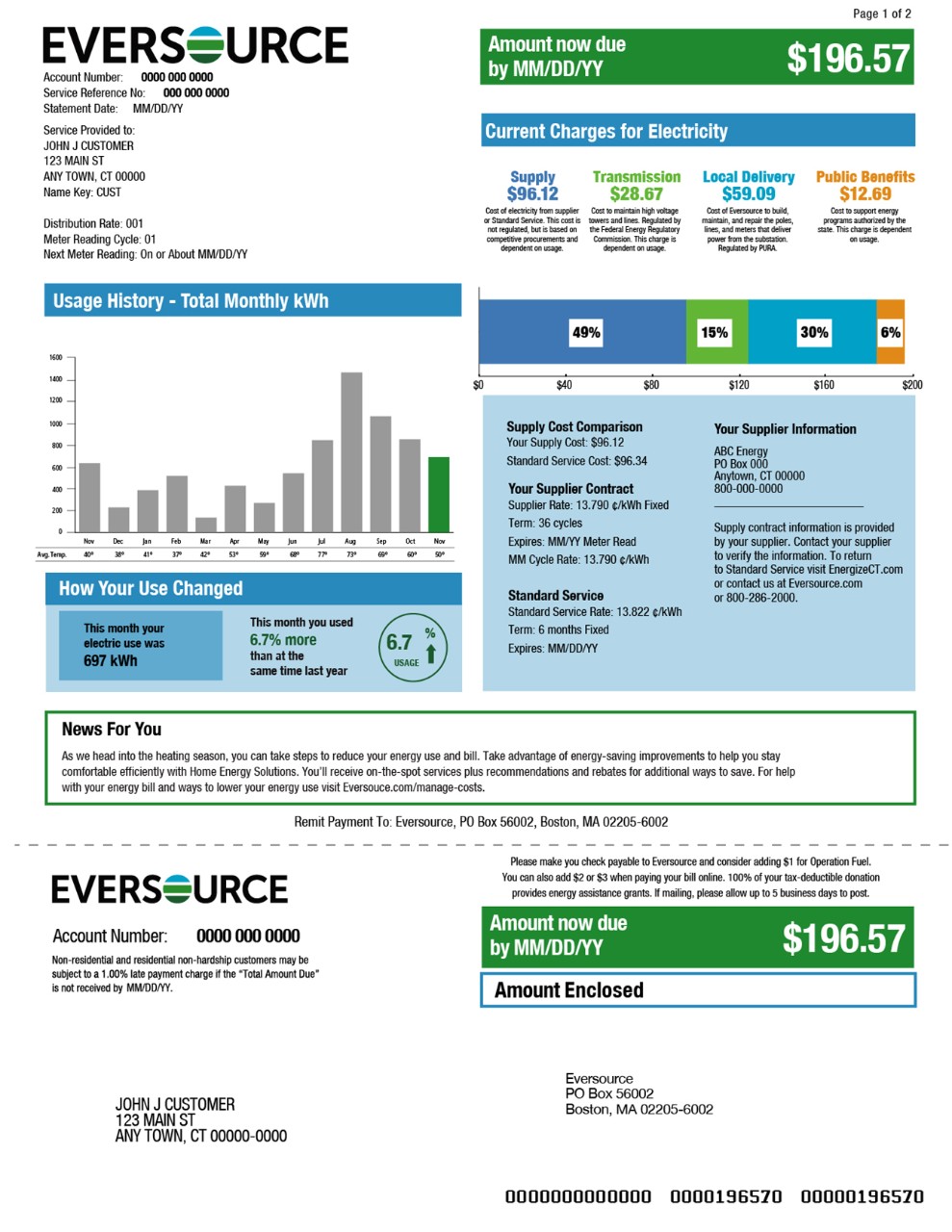
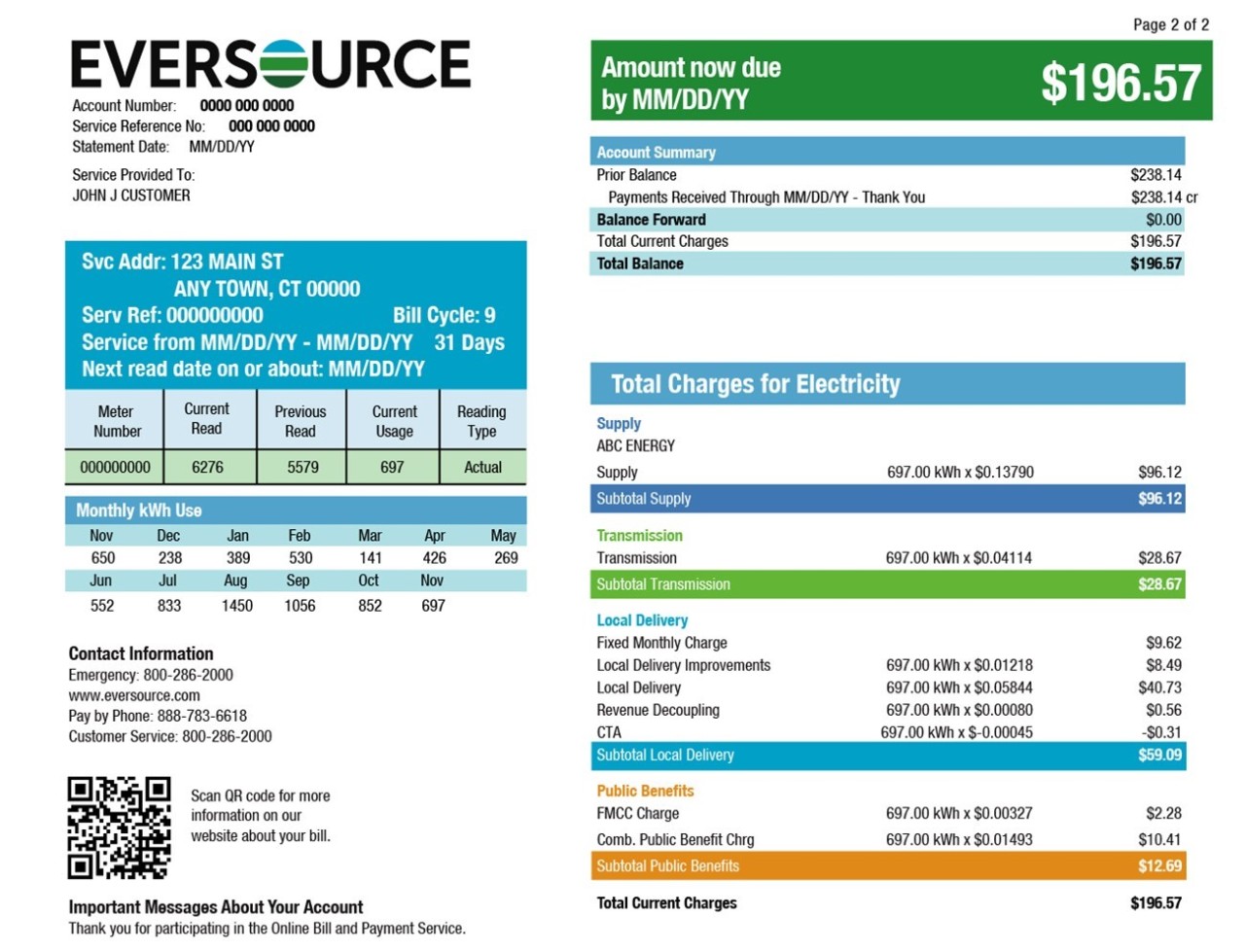
Image Source: Eversource
What Programs are Funded by the Charge
The state uses this fee to pay for a range of initiatives that further public energy goals and help a variety of individuals. By collecting this charge from all customers, Connecticut can pay for resources that reduce energy usage, lower costs over the long term, promote sustainability and help low-income customers afford power.
Below are some of the programs that the CT public benefit charge funds:
- Energy efficiency programs: Helping residential and business customers use less electricity can lower their bills. These programs support home weatherization and insulation upgrades, offer incentives for high-efficiency appliances, lights, and HVAC systems, and provide energy audits to identify where customers can cut waste.
- Low-income energy assistance: Residents who qualify may get support in the form of bill assistance, discounted rates, forgiveness of overdue bills or efficiency upgrades, all with the goal of making energy more affordable.
- Renewable energy support: Directing funds toward the use of nuclear and renewable energy supports the transition to clean energy, which helps to reduce carbon emissions in the long term.
- Grid reliability costs: Maintaining the electricity grid and investing in capacity ensures power is consistently and dependably available, even during periods of peak demand. State and regional energy policies mandate this spending, along with clean energy investments. This money does not go into utility profits.
- Regulatory obligations: Various state-mandated energy programs, previously approved contracts and costs from legacy policy decisions need to be covered, and the Connecticut public benefits charge helps offset these costs.
- Energy transition and long-term planning: The charge also goes toward modernizing the state’s energy infrastructure and grid, from increasing electrification to future clean energy initiatives.
Why People Are Talking About the Charge Now
Although the Connecticut public benefits charge has been around for a long time, it wasn’t always so noticeable. The charge was often included in the part of your bill labeled “delivery.”
A legally required utility bill redesign in 2023 threw a spotlight on this charge just as seasonal costs were escalating. This resulted in news coverage and an outpouring of complaints to state politicians.
This charge is not a new addition to your bill. The charge has always been there; it’s just more visible now.
Debates and policy proposals around the CT public benefits charge
With the recent attention on the Connecticut public benefits charge, politicians, consumer advocates, industry groups, and other stakeholders are under pressure to reduce the burden. As a result, leaders introduced Senate Bill 4, which authorized Connecticut to borrow money to cover some of the energy initiatives.
Some lawmakers want to reduce the rate or even eliminate the CT public benefit charge altogether. Environmental groups are pushing back, seeking to ensure that climate goals and grid reliability are still funded. In addition, debates continue about transparency, fairness, and the pace of reforms and investment.
How the Connecticut Public Benefits Charge Affects You
Most energy customers see the CT public benefits charge on their regular bills. You can learn more from the Connecticut Public Utilities Regulatory Authority (PURA).
What you pay depends on how much electricity you use. If you use more power, you will pay a higher public benefits charge. However, you can reduce the impact of this fee on your budget by being more energy efficient. If you consume less electricity, you pay a lower public benefits charge.
How Constellation Can Help Connecticut Residents
Constellation is a separate energy supplier, so we don’t set the rate for the public benefits charge, and we don’t receive the benefits of the charge. We can, however, help you understand your energy usage patterns and costs, compare supply rates, access savings tools and provide information on how to reduce your energy usage and, consequently, your bill.
You have choices when you sign up for electricity service in Connecticut. From sustainable energy options to fixed rates that help you manage your budget, we’ll make sure you have what you need to make informed decisions.