What is a Variable vs. Fixed Rate Energy Plan?
- Home Page
- Energy 101: Resources to Help Understand Energy
- What is a Variable vs. Fixed-Rate Energy Plan?
Variable vs. Fixed-Rate Energy Plans: Which Should You Choose?
Before choosing an energy plan, it’s important to know what your options are. Your electricity provider may offer both variable-rate plans and fixed-rate plans. But how do these energy plans work? And which one can better help you save on your electricity bill? Determining the better choice for you starts with understanding variable vs. fixed energy plans and the benefits they offer.
What is a fixed-rate energy plan?
With a fixed-rate energy plan, the price you pay per kilowatt-hour (kWh) stays the same throughout your contract. So even if market prices change, your energy rate won’t be affected. A set price makes it easier for you to plan for how much you’ll be spending on energy each month.
Even so, a fixed-rate plan doesn’t guarantee that your electric bill will always be the same. The rate is still applied per kilowatt-hour. So, your monthly bill will depend on how much energy you use, as well as any additional fees from the utility. To get an idea of the average fixed supply electricity rate that you’ll pay, view averages for the state you live in.
The benefits of choosing a fixed-rate energy plan
When comparing fixed-rate vs. variable-rate energy plans, look at the benefits each plan can offer. For example, a fixed-rate plan has many benefits that could help keep your energy costs in check, such as:
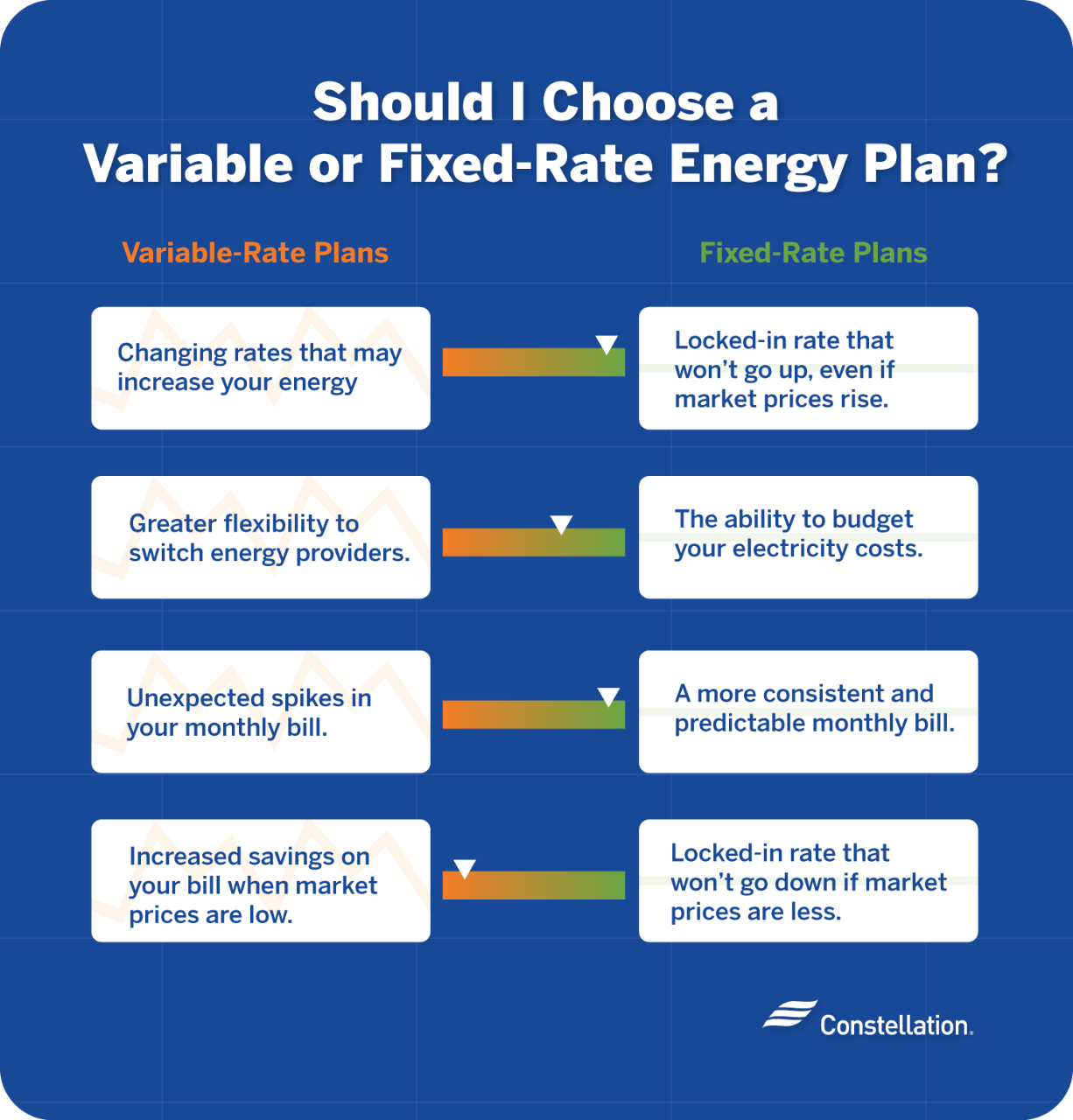
- A fixed per-kilowatt-hour rate that won’t go up even if market prices rise above your rate
- The ability to budget around your electricity costs
- A more consistent and predictable monthly bill
The disadvantages of a fixed-rate energy plan
You should also consider the disadvantages of each plan when analyzing fixed-rate vs. variable-rate electricity plans. The disadvantages of fixed-rate energy plans include:
- A per-kilowatt-hour rate that will remain the same even if market prices drop below your rate
- Possible early-cancellation fees if you decide to change plans before your contract ends
What is a variable-rate energy plan?
With a variable-rate plan, the price you pay per kilowatt-hour for electricity may be determined by the market or other factors considered by the retail energy supplier. Since the market cost of electricity changes frequently, your rates could too. This can be a good thing when market prices drop. But when factors like high temperatures or increased demand raise energy prices, a variable-rate plan could get costly.
Variable-rate energy plans can also be complicated. Some may even start at a lower fixed rate for a month or two and then jump to a higher variable rate. That’s why it’s important to carefully read through the details before deciding on any energy plan.
With a variable-rate plan, the price you pay per kilowatt-hour for electricity may be determined by the market or other factors considered by the retail energy supplier. Since the market cost of electricity changes frequently, your rates could too. This can be a good thing when market prices drop. But when factors like high temperatures or increased demand raise energy prices, a variable-rate plan could get costly.
Variable-rate energy plans can also be complicated. Some may even start at a lower fixed rate for a month or two and then jump to a higher variable rate. That’s why it’s important to carefully read through the details before deciding on any energy plan.
The benefits of choosing a variable-rate energy plan
It’s easier to choose the right energy plan when you understand how variable vs. fixed energy plans benefit customers. With a variable-rate plan, you’ll be able to enjoy benefits such as:
- Increased savings on your electricity bill when market prices are low
- Greater flexibility to switch energy providers
The disadvantages of a variable-rate energy plan
Variable-rate plans do offer some perks. But you’ll also notice some downsides when comparing variable electricity and variable gas rates vs. fixed rates. Some of the biggest disadvantages of a variable-rate energy plan include:
- Changing rates that increase when market prices are driven up
- Paying more per kilowatt-hour when the cost of natural gas and other fuels rise
- Unexpected spikes in your monthly bill that make it hard to predict and budget your expenses
Variable-rate vs. fixed-rate plans: Finding the better option for you
So, which is better: fixed or variable energy rates? Electricity plans aren’t one-size-fits-all, so the answer will vary by customer. Whether you should choose fixed or variable energy depends on how your family uses energy. It also matters where you live and how you like to structure your finances.
The biggest difference between variable-rate vs. fixed-rate plans is certainty. Fixed rates mean monthly bills you can plan for more easily. So, if you want a predictable budget, a fixed-rate plan is likely a better option for you.
Predicting your energy expenses can be difficult with a variable-rate plan. But what if you’re willing to adjust your energy use according to market trends? In that case, you could save money with a variable-rate plan. However, many individuals and families may find that kind of lifestyle and uncertainty difficult to manage.
If you’re a natural gas customer, you may also have a choice between fixed rates and variable rates for your billing plan. It’s important to weigh the advantages and disadvantages of fixed vs. variable gas rates to see which can help you reduce your energy expenses.
Take some time to understand the meaning of fixed vs. variable energy rates. By doing so, you’ll have a much better idea of which plan better suits your needs. Just as no two electricity plans are the same, no two households have the same energy needs. It comes down to how you use energy, how you like to budget, how much risk you can take and your local energy prices. But whichever plan you choose, be sure to examine the terms and conditions of your contract before committing.
How do you know what kind of rate plan you have now?
If you already know who provides electricity to your address, you can figure out what kind of rate plan you have by checking your most recent electricity bill. Remember: Your energy supplier may be different from your local utility, so look for the section that says “supply charges” or “supply services.”
If it doesn’t say your type of rate plan, look at how the costs are structured on your bill. Getting charged a single rate per kilowatt-hour month after month? You’re likely on a fixed-rate plan. Getting charged several different rates per kilowatt-hour? You’re likely on a variable-rate plan.
Now that you’re familiar with variable gas or electricity rates vs. fixed gas or electricity rates, you can start comparing your energy plan options. Should you choose fixed or variable energy? There are benefits to both types of energy plans. Which you choose will be determined by your household’s needs. Some customers take the risk with a variable-rate plan in hopes of saving money, while many opt for the certainty of a fixed rate.
If you live in a state with energy choice, you may be able to get a lower energy rate by switching to Constellation from your current electricity provider. There will be no service interruptions or unexpected fees from Constellation when you switch. Available in every state we serve, fixed-rate electricity plans are perfect if you enjoy price certainty and predictability.
How Your Location May Affect Your Fixed-Rate vs. Variable-Rate Decision
The right electricity supply plan for you often depends on your energy usage habits, weather patterns that may drive up heating and cooling costs and the prices of energy sources used for power generation in your area. Some markets experience relatively stable prices throughout the year, while others may be more volatile, with potentially larger price swings.
Choosing the right plan often involves deciding whether the flexibility of a variable electricity supply rate is worth the potential of unpredictable price changes. Alternatively, you may prefer to lock in a rate over a specified amount of time to allow for more consistent budgeting. Understanding the energy landscape where you live can be helpful as you weigh your options.
Texas: A State with a Deregulated Market
Texas is an example of how local electricity market dynamics can influence your choice between a fixed-rate and variable-rate electricity supply plan. Most Texans live in a competitive electricity market, which means they can choose their provider and plan type. Here are the key characteristics of the Texas market to consider when making your selection:
- The Electric Reliability Council of Texas (or ERCOT) operates the power grid that serves much of the state. It’s largely independent from the national grid, which limits its ability to import power during times of peak demand and can amplify price volatility.
- Summer heat regularly drives electricity demand to record levels. Wholesale prices may spike during extended heatwaves, directly affecting variable-rate customers.
- Winter weather events can also cause extreme market volatility. Variable-rate customers in Texas have faced bill increases during major cold snaps when grid supplies become more restricted.
- Since natural gas fuels a large share of the electricity generation in the state, changes in natural gas prices can contribute to price volatility in Texas.
For most electricity customers in competitive parts of the state, a fixed-rate electricity supply plan makes sense, as it can help protect them from the volatility of the Texas energy market.
Pennsylvania: A Competitive Electricity Market with Less Potential Volatility than Texas
In contrast to Texas, while most Pennsylvania residents also have the benefit of energy choice, the state’s energy landscape is shaped by different factors. Here’s what you need to know about the electricity market in Pennsylvania:
- Pennsylvania operates within the PJM Interconnection, one of the largest and most interconnected power grids in the world. It covers 13 states and Washington, D.C., which gives utilities the ability to balance supply across a wide area during demand spikes.
- The interconnection acts as a buffer. When local demand peaks, Pennsylvania can draw on power from neighboring states, which may reduce the wholesale price volatility that variable-rate customers are exposed to.
- Pennsylvania has four distinct seasons but typically lacks the extreme heat that drives Texas’ summer demand. This can reduce the frequency and severity of price spikes that can affect variable-rate plans, but it doesn’t completely eliminate them.
- More diversification in power sources and fuel in Pennsylvania may smooth out price swings.
Due to the power infrastructure and usage patterns in Pennsylvania, there’s typically less price volatility, making variable-rate plans a reasonable option. Most customers in Pennsylvania can exercise their power of choice among energy suppliers independent of their local utility.
If you can track market conditions and manage your electricity usage during peak price periods, a variable-rate plan may be right for you. However, even with more stable prices in Pennsylvania’s power markets, many customers still opt for the predictability of fixed-rate plans.
Florida and Georgia: Non-Competitive Electricity Markets
Customers in Florida and Georgia live in non-competitive retail electricity supply markets. Instead of a choice of providers, there’s a utility-controlled system with one provider responsible for generating power, transmitting it across its service area and setting prices.
When it comes to determining rates, the state utility commissions oversee and regulate the process. They set the rate, so you don’t have a choice between variable-rate and fixed-rate plans.
As a competitive retail electricity supplier, Constellation doesn’t sell retail electricity in either Florida or Georgia. Some customers in Georgia can, however, select Constellation as their retail natural gas supplier and choose from different plan offerings.
Before considering if a fixed-rate or variable-rate electricity supply plan is right for you, check to see if you have a choice of supplier. Some states, and certain parts of states, have competitive electricity markets, allowing residents to choose among competitive suppliers and plan options.