
Energy prices change due to a combination of market, weather and usage factors. Some influences are outside a business’s control, while others relate to how and when energy is used. This page explains the most common drivers of business energy pricing and what businesses can monitor or manage
The Big Picture: Why Business Energy Prices Move
Business energy pricing is shaped by a mix of market conditions and real‑world constraints including how much energy is needed, what it costs to produce and what it takes to deliver reliably. Even if your supply rate stays stable, your total bill may still change. This can happen because of usage and regulated delivery charges.
What Can I Control?
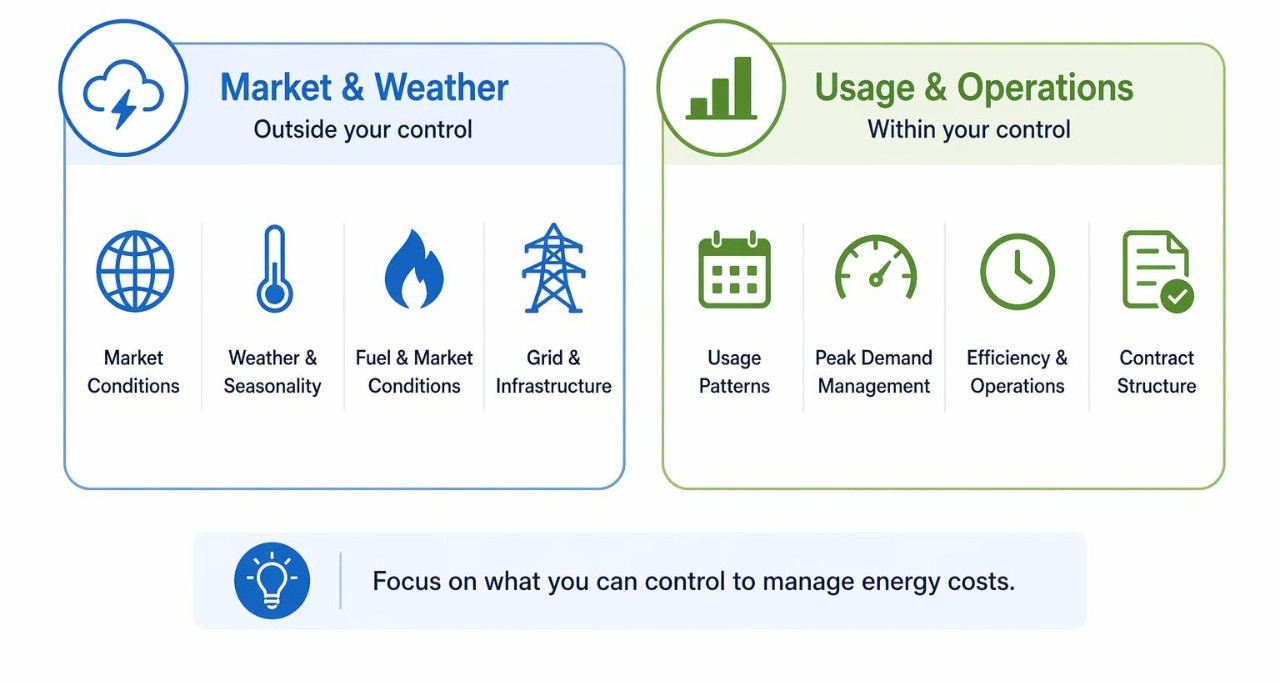
External Drivers (Outside a Business's Control)
| Market Factor | How it Works |
|---|---|
| Supply and Demand | When demand increases during peak seasons, economic growth or heavy industrial activity, market prices can rise. When demand decreases, market pressure may ease. |
| Weather and Seasonality | Weather affects both usage and market pricing. Cold snaps and heat waves increase demand for heating or cooling, which can raise market prices and also increase bills through higher consumption. |
| Fuel Availability and Market Conditions | Electricity prices are influenced by fuel costs (such as natural gas) and generation availability. Production levels, storage and weather-driven demand can impact natural gas prices. |
| Grid and Infrastructure Conditions | Grid constraints, transmission limitations and reliability needs can affect costs in certain regions, especially during peak demand periods. |
| Policy and Regulation | Taxes, fees and regulatory requirements can influence portions of the total bill. In some areas, state market structure determines whether businesses can shop for supply and what options exist. |
| Emerging Demand (Including Data/AI Load Growth) | Rising electricity demand from data infrastructure and electrification can affect market and grid conditions. While individual businesses don’t control these trends, they can influence how much exposure they have through usage and contract structure. |
What Businesses Can Influence
| Factor | Why It Matters |
|---|---|
| Usage Patterns | How much energy you use and when it has a direct impact on your bill. Start by looking at operating hours, seasonality of operations and equipment load (HVAC, refrigeration, motors, process equipment). A useful first step is identifying your highest-use months and what drives those peaks. Learn More: How to conduct an energy audit |
| Peak Demand (Electricity) | During times of high energy usage, or peak demand times, energy prices tend to be higher. For some businesses, peak usage can influence cost components such as capacity-related costs. Reducing extreme peaks (even briefly) can be meaningful depending on rate structure and region. Learn More: Peak Demand |
| Energy Efficiency and Operational Improvements | Efficiency doesn’t change market prices, but it can reduce how much energy you need to buy, especially in high-use seasons. Learn More: How to Improve Your Building’s Energy Efficiency |
| Contract Structure (What You’re Exposed To) | Some contracts emphasize stability; others allow more exposure to market movement. This isn’t inherently good or bad—it’s a business preference tied to budgeting needs and tolerance for risk. |
Putting It All Together
Business energy prices are influenced by a combination of market forces, weather, usage patterns and the type of contract you choose. While many pricing drivers are outside a business’s control, understanding how and when energy is used and how your contract responds to market movement can provide greater clarity around your bill. Monitoring usage, managing peak demand and selecting a contract structure that aligns with your budgeting goals can help businesses navigate energy price changes with more confidence over time.
Energy rates are made up of several different components, each playing a unique role in what you ultimately pay.
What Impacts Can Rising Energy Pricing Have on My Business?
Rising energy prices can significantly increase operating costs, strain cash flow and make budgeting less predictable for businesses of all sizes. Over time, these higher costs can reduce competitiveness, delay growth investments and force difficult decisions around pricing, staffing and operations. Here are some things to consider:
| Direct Financial Impacts | Operational Challenges | Long Term Business Impacts |
|---|---|---|
| Higher monthly utility bills reduce available cash flow | Manufacturing businesses face higher production costs | Your business’s suppliers pass their increased energy costs through higher prices, potentially forcing the difficult decision about raising prices in competitive markets |
| Increased operating costs squeeze already-thin profit margins | Retail stores pay more for lighting, heating/cooling and refrigeration | Creates competitive disadvantage against larger businesses with more resources to absorb costs |
| Unexpected energy price spikes can disrupt budgeting and financial planning | Service businesses see higher costs for running essential equipment | Small businesses may delay equipment upgrades and maintenance |
| Higher energy expenses can limit investment in growth initiatives and hiring | Businesses may need to adjust operating hours or reduce energy usage during peak demand periods | Postpone hiring or reduce staffing |