
Business energy is different from residential energy, especially in states with competitive energy markets. While electricity and natural gas are delivered the same way, businesses often face different choices and considerations when selecting an energy supplier, with the local utility continuing to deliver energy, maintain infrastructure and respond to outages
Understanding how business markets work can help businesses evaluate energy suppliers, plan structures and pricing options with greater confidence.
This page explains the difference between energy supply and energy delivery. It helps you understand which parts of your business energy service you can compare. It also shows what you can control or change before you review plans or pricing.
Once you understand how business energy works, the next step is learning how businesses evaluate and compare energy plans.
What is Business Energy Supply?
Business energy service has two parts: energy supply and energy delivery. Choosing a supplier does not change who maintains the grid or pipelines, who responds to outages or emergencies and how energy is physically delivered to your business
Energy Supply
Energy supply refers to the electricity or natural gas commodity itself.
In states with business energy choice, businesses may be eligible to purchase this supply from a competitive energy supplier, rather than defaulting to utility supply.
Supply pricing, contract terms and plan structure are determined by the supplier and the type of plan selected.
Energy Delivery
Energy delivery is always handled by the local utility.
Utilities own and maintain power lines, gas pipelines, meters and related infrastructure. They also manage meter readings, respond to outages or gas emergencies and ensure energy is delivered safely and reliably.
What's the Difference Between an Energy Supplier and a Utility?
In competitive energy markets, suppliers and utilities serve different roles.
| Energy Supplier | Local Utility |
|---|---|
| Supplies the electricity or natural gas commodity | Delivers energy to your location |
| Sets supply pricing | Maintains grid and pipeline infrastructure |
| Defines contract terms | Responds to outages and emergencies |
Understanding this separation can help you focus your research on the parts of energy service you can actually compare or change.
Why Do Some Businesses Have Energy Choice (and Others Don’t)
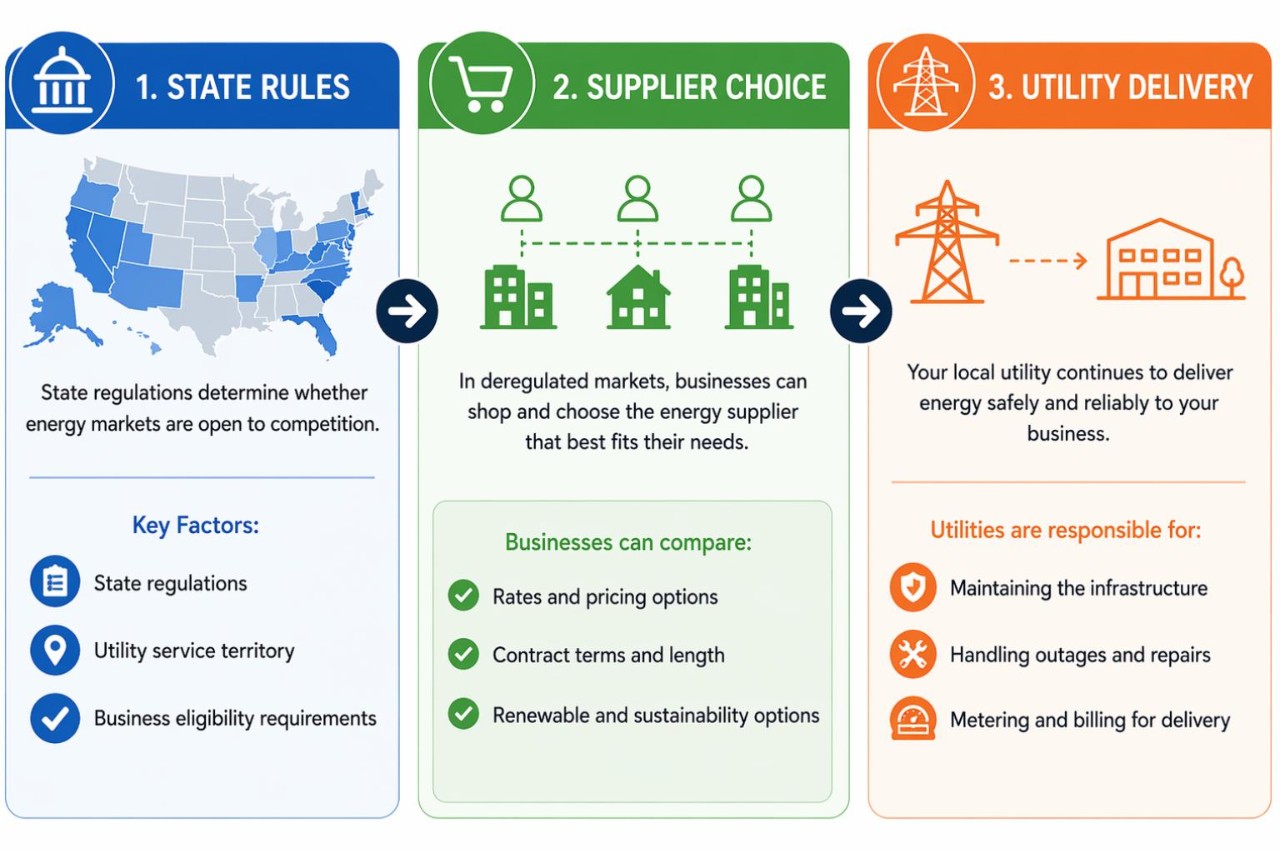
Business energy choice exists in certain states due to deregulated energy markets, which separate energy supply from energy delivery.
These markets allow businesses to shop for supply while utilities continue providing delivery services.
Whether a business has energy choice depends on:
- State regulations
- Utility service territory
- Business eligibility requirements
Some states allow supplier choice for electricity, natural gas or both. Others do not allow competitive supply. In some cases, availability can differ within the same state depending on the utility.
Confirming eligibility is often the first step before comparing energy plans for pricing.
Electricity vs Natural Gas: How Business Energy Works for Each
Electricity and natural gas follow the same supplier‑versus‑utility model where energy choice exists, but they differ in important ways:
- Electricity pricing often includes additional components such as capacity and transmission
- Natural gas pricing commonly includes commodity (market‑based) and basis (transportation) components
- Usage is measured differently (kilowatt‑hours vs. therms or CCF)
This page provides high-level orientation only. More detailed explanations are available on the Electricity Plans and Natural Gas Plans pages.
Frequently Asked Questions
Your local utility always handles outages and infrastructure. Choosing a supplier does not change outage response or delivery reliability.
No. Availability depends on state regulations and utility rules and business eligibility.
A utility delivers electricity or natural gas and maintains the infrastructure. An energy supplier provides the electricity or natural gas supply portion of the service.
Businesses may be able to shop for the energy supply portion of their electricity or natural gas service. Delivery charges remain the responsibility of the local utility.
If you do not choose a supplier, your business continues receiving electricity or natural gas supply though the utility or default supply provider.
In some areas, businesses receive a single combined bill from the utility. In others, supply and delivery charges may appear separately. Billing format depends on the state and utility.