
Switching energy suppliers allows businesses to change who supplies their electricity or natural gas without affecting service reliability. The process varies by state and does not include service interruptions or require new equipment.
Can I Switch Electric or Natural Gas Companies for my Business?
In states with energy choice (also called retail choice), businesses can select their own electric or natural gas supplier instead of defaulting to the utility. Competitive energy suppliers handle the switching process and offer a range of plan options and support services.
What Information Do Businesses Review Before Switching?
Before switching suppliers, businesses often gather:
- A recent utility bill to confirm usage and service details
- The current contract end date to understand timing
- Basic account information such as service address, meter number and account number
This information helps determine eligibility and timing.
How the Switching Process Works
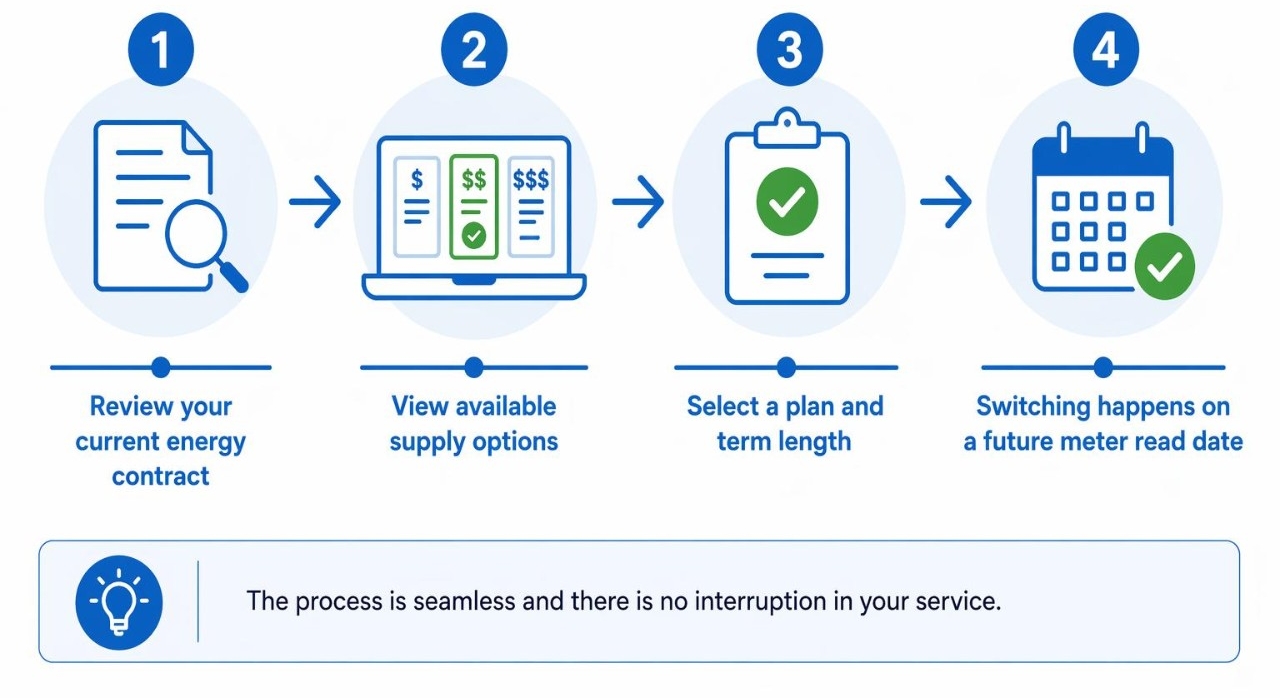
More details on each step in the switching process:
- Step 1
- Step 2
- Step 3
- Step 4
Review your current energy contract
Businesses often start by looking at their current agreement to understand:
- When their contract ends and whether any renewal or expiration dates are coming up
- The type of rate they’re on (fixed, variable or utility default supply)
- Whether their current pricing still fits their budget or usage patterns
This step will help your business identify when switching makes sense and what you may want to change.
View available supply options
Next, take time to view available supply plans in your state. Common things you might compare include:
- Pricing structures that offer more predictability or budget stability
- Contract term lengths that align with how long you want rate certainty
- Options for renewable energy or sustainability goals
This is where many businesses decide what “better” looks like for them.
Select a plan and term length
Once options are reviewed choose a plan that fits your businesses priorities, such as:
- Locking in a fixed rate for cost certainty
- Choosing a shorter or longer term based on flexibility needs
- Aligning energy supply with growth, seasonal usage or any operational changes
The goal is selecting a plan that supports how your business operates today and where it’s headed.
Switch on a future meter read date
After enrollment, the switch is scheduled to occur on a future meter read date set by the utility.
- There’s no downtime, site visit or equipment change
- The transition happens automatically in the background
- Your utility remains the same throughout the process and continues to deliver your energy.
What Stays the Same vs. What Changes
Energy choice separates energy supply from energy delivery. Your local utility continues to handle delivery, infrastructure and outages, while you have the option to choose a supplier for the supply portion of your service. Here’s a simple breakdown of what stays the same and what may change when you switch suppliers.
| What Stays the Same | What Changes |
|---|---|
| Utility delivery – there will be no interruption in your electricity or natural gas service | The company supplying your electricity or natural gas |
| Meters and infrastructure maintenance – your utility will continue to service your equipment and maintain power lines and natural gas pipelines | Your energy rate – energy choice allows you to pursue pricing options and plans that may be different from what your supplier or utility is currently offering. |
| Outage and emergency response – your utility will continue to respond to outages | Your customer service – you may experience improved customer service when you switch to a new supplier |
Timing Expectations
Switches typically occur on a future meter read date. Timing depends on utility rules and state regulations. Always check your current contract to see when it ends and if there are any penalties for leaving the contract early.