
Choosing an energy plan involves balancing cost predictability, usage patterns, contract terms and risk tolerance. This guide explains what businesses commonly consider before selecting an electricity or natural gas plan.
When deciding on an energy plan for your business, it isn’t just about the lowest rate. It’s about picking an option that fits your business today. It should also support your goals as you grow. Whether you’re looking for more predictable costs, flexibility as your usage changes or alignment with sustainability priorities, understanding the key factors that influence energy plans can help you make a more confident, informed decision.
Key Factors Businesses Evaluate
Why this matters: Evaluating these factors upfront can help you avoid surprises and select a plan that fits how your business uses energy.
| Factor | What to Consider | Learn More |
|---|---|---|
| Usage pattern | Consistent vs seasonal | Jump to section |
| Price stability | Predictability vs flexibility | Jump to section |
| Contract length | Short vs long planning cycles | Jump to section |
| Risk tolerance | Comfort with market movement | Jump to section |
| Sustainability | Current business sustainability goals | Jump to section |
A business’s energy usage profile plays a central role in plan evaluation. Look at:
- How much energy your business uses overall
- Whether your usage is consistent or seasonal
- When your usage peaks during the day or year
Usage information can be found on a utility bill or your current supplier’s bill and helps frame plan comparisons.
Energy plans manage price risk differently. Some plans prioritize price consistency over time while others allow pricing to move with market conditions
The approach your business takes will depend on several factors. These include your business’s risk tolerance, budget, and long-term goals.
Contract terms determine how long pricing and plan conditions remain in place. Shorter and longer contracts involve different trade‑offs related to flexibility, renewal frequency and planning horizons.
Every energy plan involves trade‑offs. Some plans are designed to limit exposure to market movement by prioritizing price stability, while others allow pricing to adjust as market conditions change. Understanding how different plans manage risk helps your business choose the right option. It shows what level of predictability or flexibility fits your budget and operations.
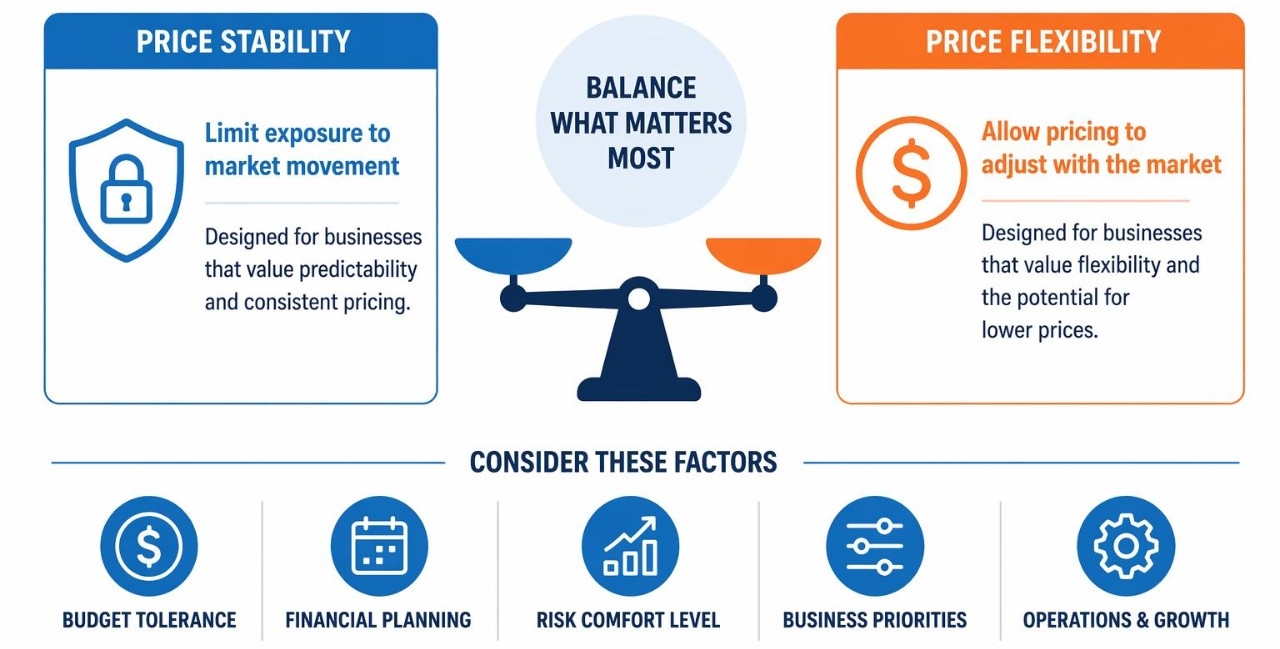
Rather than one option being “better” than another, the right choice often depends on factors like how easily your business can absorb cost changes, how far ahead you plan financially and whether you value consistency or responsiveness more. Recognizing these trade‑offs upfront makes it easier to align your energy plan with how your business operates day to day and how much uncertainty you’re comfortable managing.
Some plans may include renewable energy or offer the option to purchase renewable energy certificates or offsets. Determine if this is an important factor for your business.
Reviewing Your Current Bill
Before comparing energy plans, many businesses review their current bill to see what they pay today. You don’t need to analyze every line item, just enough information to establish a baseline. Look at:
- Usage levels (kWh or therms)
- Supply charges vs delivery charges
- Contract end dates
A general sense of energy used over time. It shows if usage stays steady or changes by season.
Identify which part of the bill is for energy supply. This part may be shoppable. Identify which part is for utility delivery charges. These charges stay the same regardless of supplier.
Knowing when an existing supply agreement ends helps determine timing and avoids rushed decisions
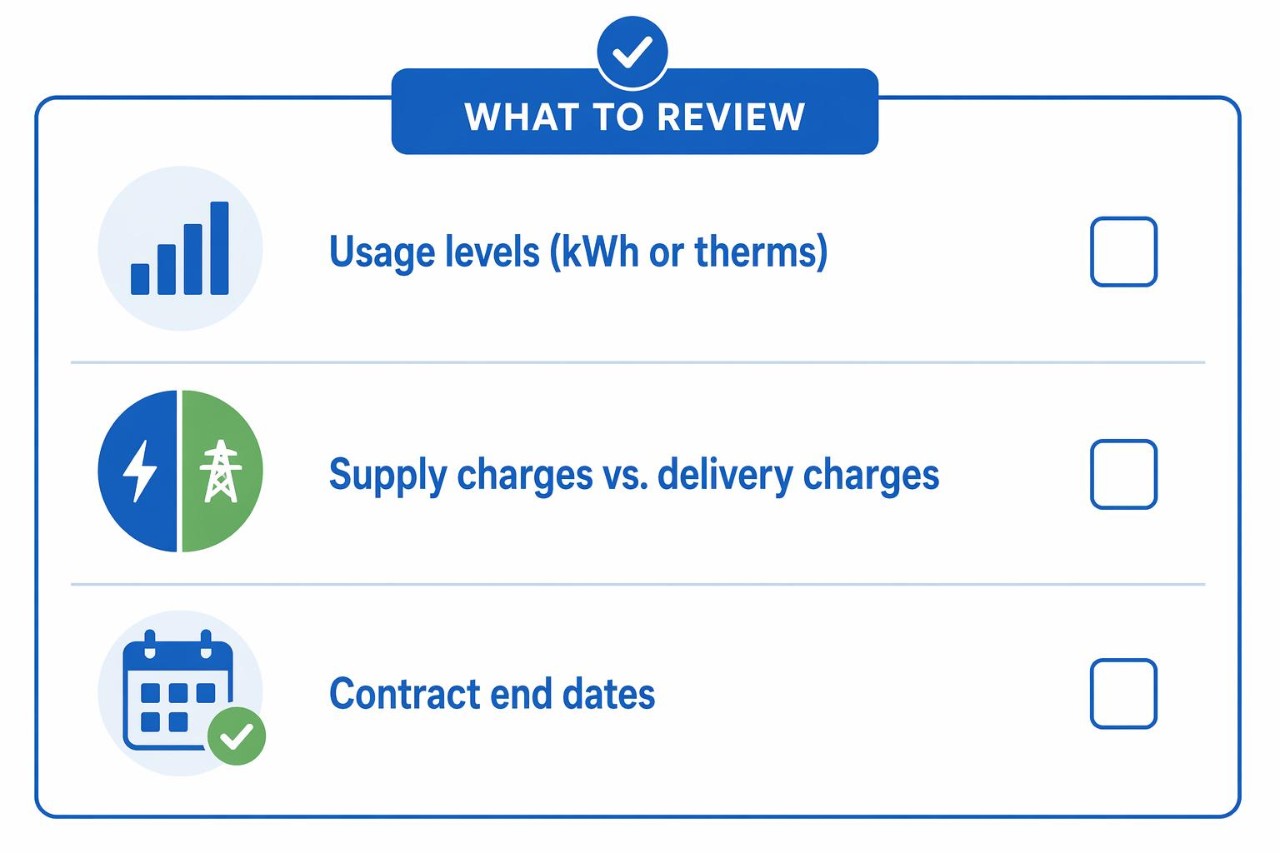
Having this information upfront makes it easier to compare options on an apples-to-apples basis. It also helps you ask informed questions, even if you are not ready to switch yet.