
Energy plans are tools for managing cost predictability and market exposure. Choosing a plan involves understanding your business goals, usage patterns, risk tolerance and preferred contract length then matching those needs to the plan structures available in your state
Energy costs are among the biggest monthly expenditures for business customers. Here’s what to consider when choosing an energy plan for your business:
Step 1: Determine What Kind of Energy You Need
What energy does your business use? Do you have only electric heaters, boilers and stovetops? Or do some of your major appliances use natural gas? Perhaps you have a mix of both. Knowing what kind of energy you need is the next step in picking the right energy plan.
Step 2: Confirm What’s Available Where You Operate
Availability varies by state and utility territory. Before spending time comparing plans and structures, confirm:
- whether energy choice exists for your location
- which plan types are offered in your state
Step 3: Decide What Your Business Goals Are
Businesses typically begin by clarifying priorities such as:
- budget stability (more predictable supply costs)
- flexibility (re‑evaluating options more often)
- operational fit (plans aligned to how the business uses energy)
- sustainability goals (where relevant)
Step 4: Understand Your Usage and Patterns
Usage is one of the most useful decision inputs. Many businesses review:
- monthly kWh (electricity) or therms (gas)
- seasonality (heating/cooling swings)
- whether operations are consistent or variable
You should also consider future changes that might affect your business’s consumption.
Step 5: Match Risk Tolerance to Plan Structure
Plan types can be thought of as different ways to manage exposure to market movement.
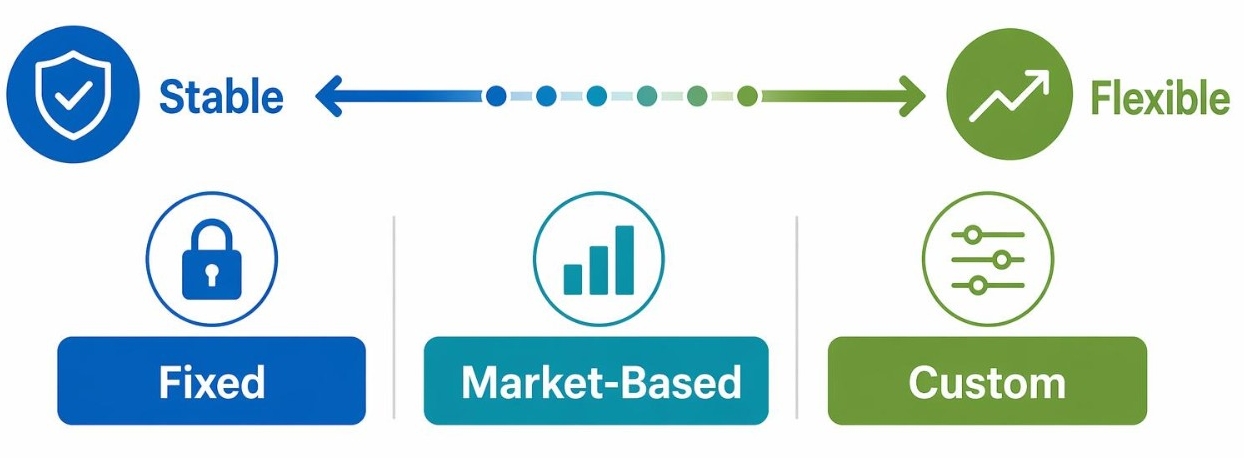
Fixed Rate Supply Plans
Fixed structures emphasize a stable supply rate over the contract term.
Market‑Based Plans (available in certain regions)
Some structures allow supply pricing to change with market conditions.
Custom Plans
Custom plans may be structured around specific usage profiles or operational needs.
Step 6: Choose a Contract Term Length That Matches Planning Cycles
Contract length influences how often you need to review/renew, how long pricing structure stays in place and how much flexibility you retain mid‑term.
Shorter- Term Contracts (typically under 12 months)
| Pros | Cons |
|---|---|
| Greater flexibility to revisit plan options more frequently | Requires more frequent renewals |
| Shorter commitment period | Exposure to changing market conditions when the term ends |
| Supply cost may be lower | May provide less long-term budget stability |
Longer - Term Contracts (12 months or longer)
| Pros | Cons |
|---|---|
| Longer period of rate consistency and a predictable energy supply rate | Supply cost may be slightly higher |
| Fewer renewals over time | Longer commitment period |
| Less time shopping and renewing rates | Inability to take advantage when market prices drop |
Step 7: Evaluate Supplier Benefits
When comparing energy suppliers, you should:
- Read customer reviews and ratings
- Check complaint history with regulatory bodies
- Assess responsiveness and support options
- Check to see if there is online billing and account management
- Look for any loyalty programs or additional perks that might benefit your business
Supplier experience can matter over time, especially when you need support, billing clarity or help at renewal.
Bringing It All Together
Choosing the right energy plan is less about finding a single “best” option and more about aligning plan structure with how your business operates and plans for the future. By understanding your energy needs, usage patterns, and risk tolerance, you can choose a suitable plan. Consider your preferred contract length, supplier support, and available services. This helps you manage costs, fit operations, and build long-term confidence. Revisiting these factors periodically helps ensure your energy plan continues to meet your business’s needs as conditions change.