
Business energy pricing includes multiple components beyond the advertised supply rate. Understanding these components helps explain why bills change over time and what factors influence total cost.
How Rates Take Shape
Before a business sees a rate, several inputs come together to shape it:
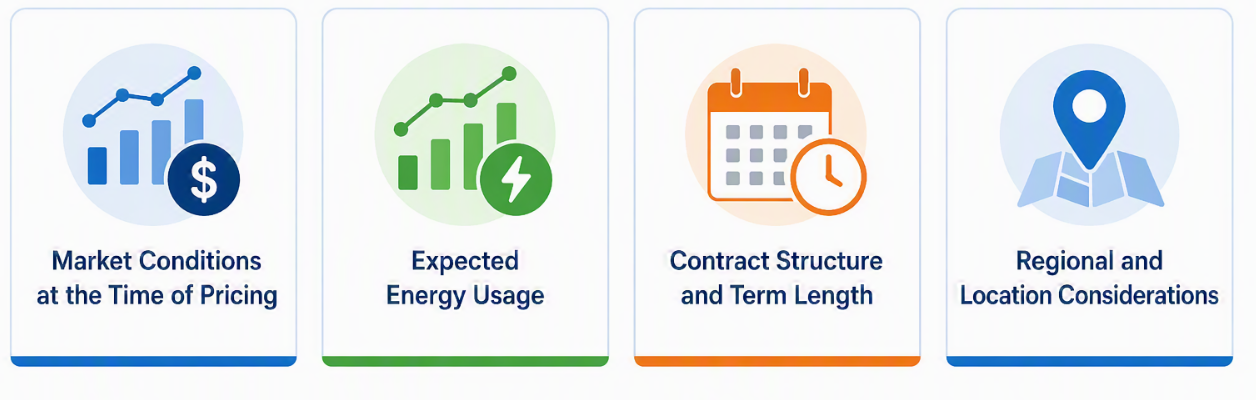
- Market Conditions at the Time of Pricing
- Expected Energy Use
- Contract Structure and Term Length
- Regional and Location Considerations
Energy prices reflect supply and demand in the broader energy market. Conditions such as seasonal demand, fuel availability and overall economic activity influence where market prices are when a rate is set.
Rates are based on forward‑looking expectations, not just today’s market price. That means pricing reflects what energy is expected to cost over the duration of the contract, not just current conditions.
When a rate is formed, expected usage is considered alongside market pricing. Businesses with higher or more variable usage may see rates structured differently than those with steady, predictable consumption.
This is why usage patterns, how much energy is used and when matter even before a contract begins.
The structure of a contract plays a key role in how rates are formed. Factors such as:
- how long the contract lasts
- whether pricing is fixed or market‑responsive
- how much flexibility is built into the agreement
all influence how supply pricing is established. Longer terms rely more heavily on forward market expectations, while shorter terms reflect nearer‑term market outlooks.
Energy markets are regional. Where a business is located affects how energy is generated, transported and priced in that area. Local grid conditions, fuel access and infrastructure constraints all contribute to how rates are formed in a given region.
Once a rate is established, the next piece of the equation is how energy usage is measured. Electricity and natural gas are priced based on standardized units that reflect how much energy a business actually consumes over time. Understanding these units helps explain how rates translate into monthly charges on a bill.
How is Electricity Measured?
kW vs kWh: What's the Difference?
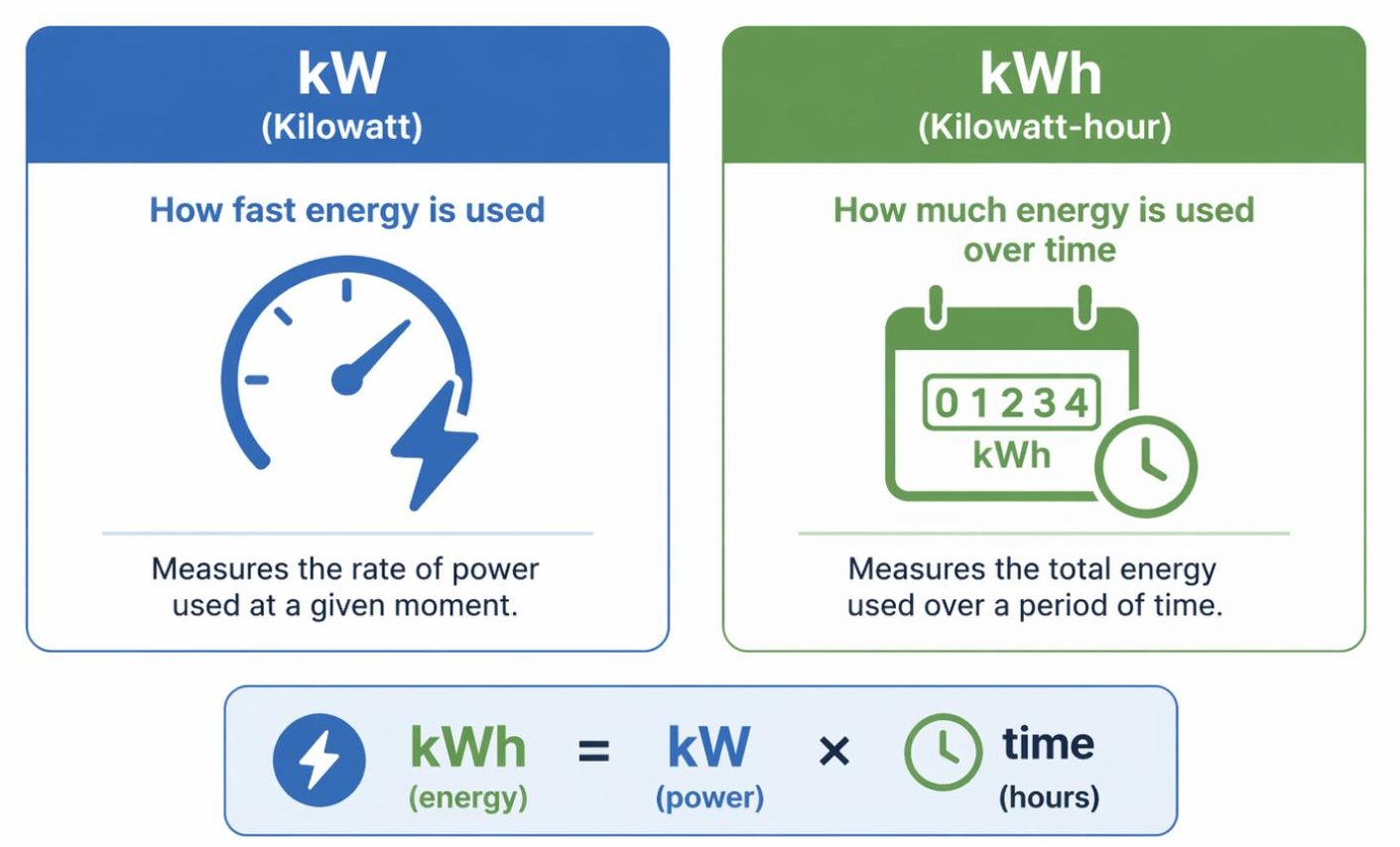
A kW is short for kilowatt, a unit of electrical power that equals 1,000 watts. By contrast, a kWh (kilowatt-hour) measures energy: that is, power exerted over time specifically, kilowatts used per hour. A kilowatt-hour is the energy, while a kilowatt is simply the rate energy is used in any given moment. Your energy provider bills you based on your overall usage in kilowatt-hours per month.
Why this matters: These units determine how your usage translates into monthly charges on your bill.
What Makes Up My Electricity Rate?
Energy rates are made up of several different components, each playing a unique role in what you ultimately pay.
Energy: The cost of procuring the actual electrons transmitted through the transmission and distribution lines.
Capacity: Capacity charges are fees that compensate power plant operators for ensuring that enough resources will be available to meet demand.
Transmission: The cost of transferring electrical energy from power plants to electrical substations located near demand centers.
Ancillaries: RTOs charge load-serving entities fees to provide ancillary services, which include backup power, voltage support and other critical functions.
Renewable Portfolio Standards (RPS): State mandates for load-serving entities (LSEs) to purchase a certain amount of renewable energy.
Line Losses: Fees to make up for the energy lost over transmission and distribution (T&D) lines due to heating.
Electricity Rate Components
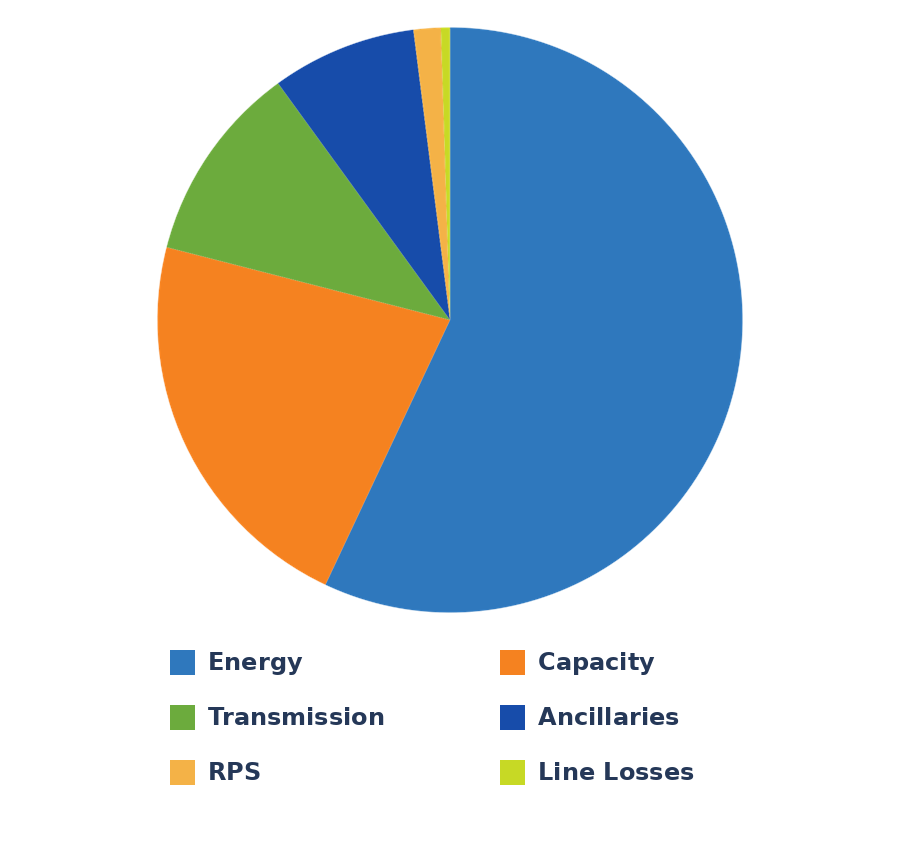
Graph is for illustrative purposes only, not representative of real data
You will also see delivery charges on your bill which are set by your local utility.
Just as electricity usage is measured in standardized units, natural gas consumption is tracked using its own set of measurements. These units reflect how much natural gas is used over time and form the basis for how supply charges are calculated on a bill.
How is Natural Gas Measured?
A therm is a way to price natural gas. Many suppliers and utilities bill their natural gas price per therm. You can measure natural gas use in several different ways. You might have seen terms like “therm,” “BTU” and “CCF.” Here is what they mean.
A BTU measures the heat value of an energy source. It’s short for British thermal unit, which is the amount of heat it takes to raise the temperature of 1 pound of water by 1 degree Fahrenheit. A natural gas therm is equal to 100,000 BTU.
CCF is short for one hundred cubic feet (C is the Roman numeral for 100). CCF measures the quantity, or volume, of natural gas.
Below is a chart that shows how to convert to a term you may be more accustomed to seeing on your gas bill, therm or dekatherm.
| Unit of Measure | Conversion Rates | How it's Used |
|---|---|---|
| Therm | 1 th | $0.20/th |
| Dekatherm | 10 th = 1 Dth | $2.00/Dth |
| Million British Thermal Units | 1 Dth = 1 MMBtu | $2.00/MMBtu |
What Makes Up My Natural Gas Price?
Natural gas pricing has two components: commodity price and basis price. For the commodity portion, NYMEX is the national benchmark price that changes with the market every month. This is commonly referred to as Henry Hub Futures Prices.
The second part, basis price, covers the physical cost for transportation, fuel, storage and local production. For most customers, NYMEX makes up much of your gas price and is highly correlated to your overall monthly gas costs.
Usage still determines the total bill, even when rates are fixed.
Total Gas Price
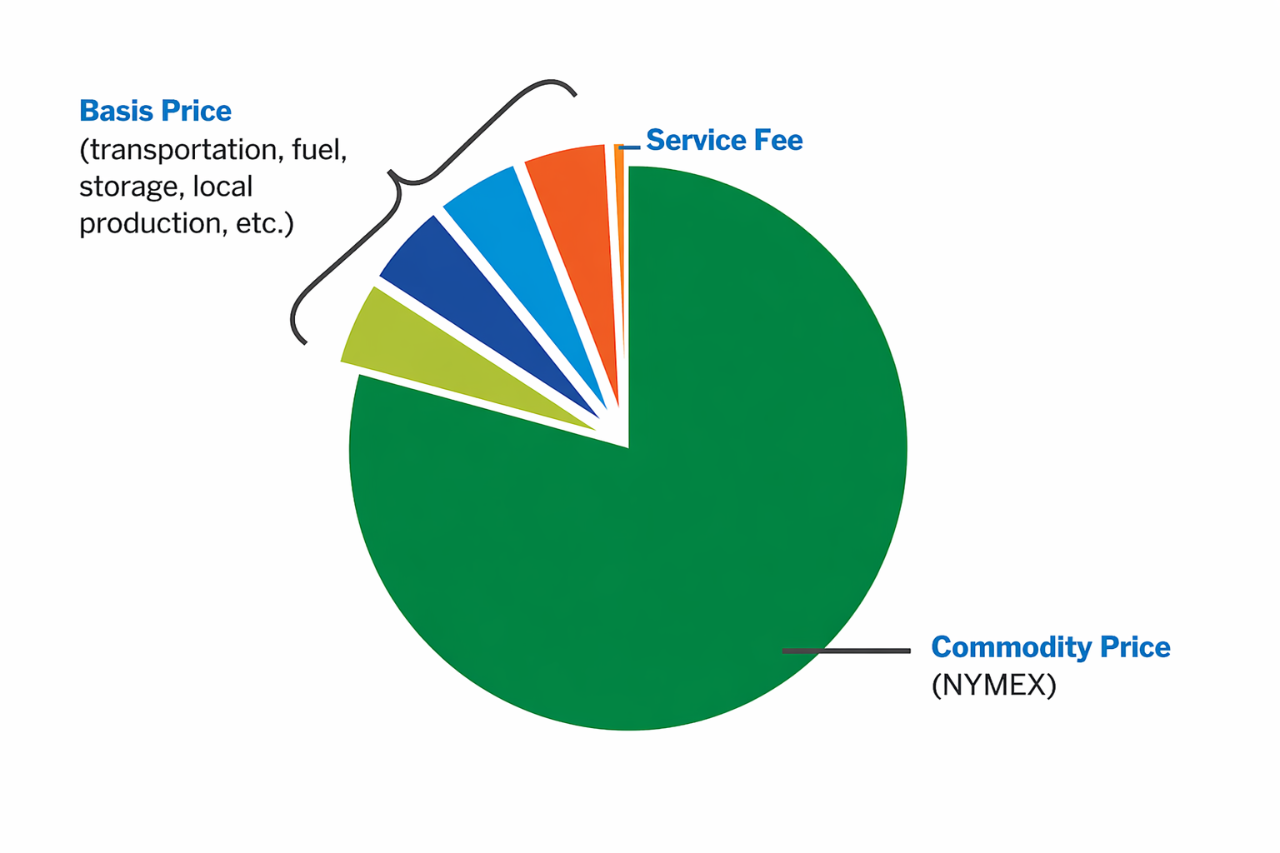
Graph is for illustrative purposes only, not representative of real data
Why Prices Change
Price movement is a normal part of how energy markets work. Some factors like weather and seasonal demand can change quickly, while others, such as contract structure, influence how much of that movement a business actually experiences. Understanding these drivers helps explain why prices can shift over time and why different plans respond differently to changing conditions.
Prices may vary due to: