Energy Efficiency Tips for Retail & General Merchandise Stores
Retail energy use is often driven by lighting, HVAC systems and extended operating hours. This guide explains how energy is typically consumed in retail environments and highlights operational areas businesses often review when managing costs and maintaining customer comfort. This content is intended to provide industry-specific context, not recommendations.
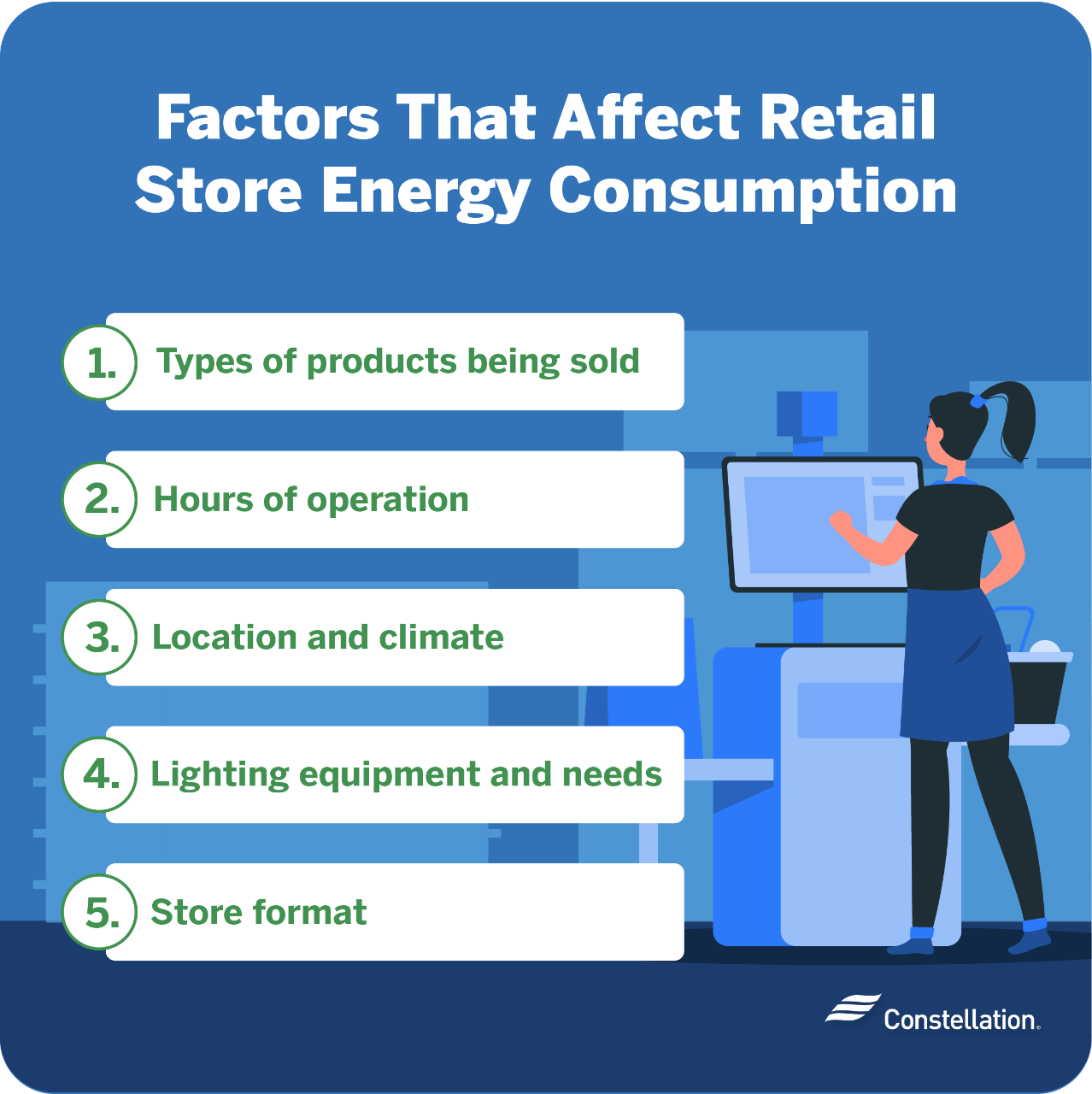
Factors that affect retail store energy consumption
The following factors have the most influence on your retail store operating expenses when it comes to energy consumption.
- Types of products being sold. The type of merchandise you carry will affect your energy usage. If you are selling televisions, gaming systems, and electronics, you are likely using energy all day for display units. If you sell products that need refrigeration, it is likely your retail store will consume more energy around the clock.
- Hours of operation. The more hours your store is open, the longer the lights will be on, the HVAC will be humming, and hopefully the cash register will be ringing. That all means more power usage.
- Location and climate. If your store is in a very cold, very hot or very humid climate, your HVAC system will work harder and longer. HVAC is typically one of the largest power draws in a retail environment.
- Lighting equipment and needs. The number and type of lights in your store can drive up energy usage considerably.
- Store format. A stand alone store with doors opening directly to the outside uses more power for HVAC than a store inside a mall. That will drive up the average retail store utility costs.
Priority Energy Actions for Retail Businesses
After rent, inventory and salaries, energy is one of the larger retail store operating expenses. Energy efficiency for retail stores makes economic sense as much as it helps your brand and the environment.
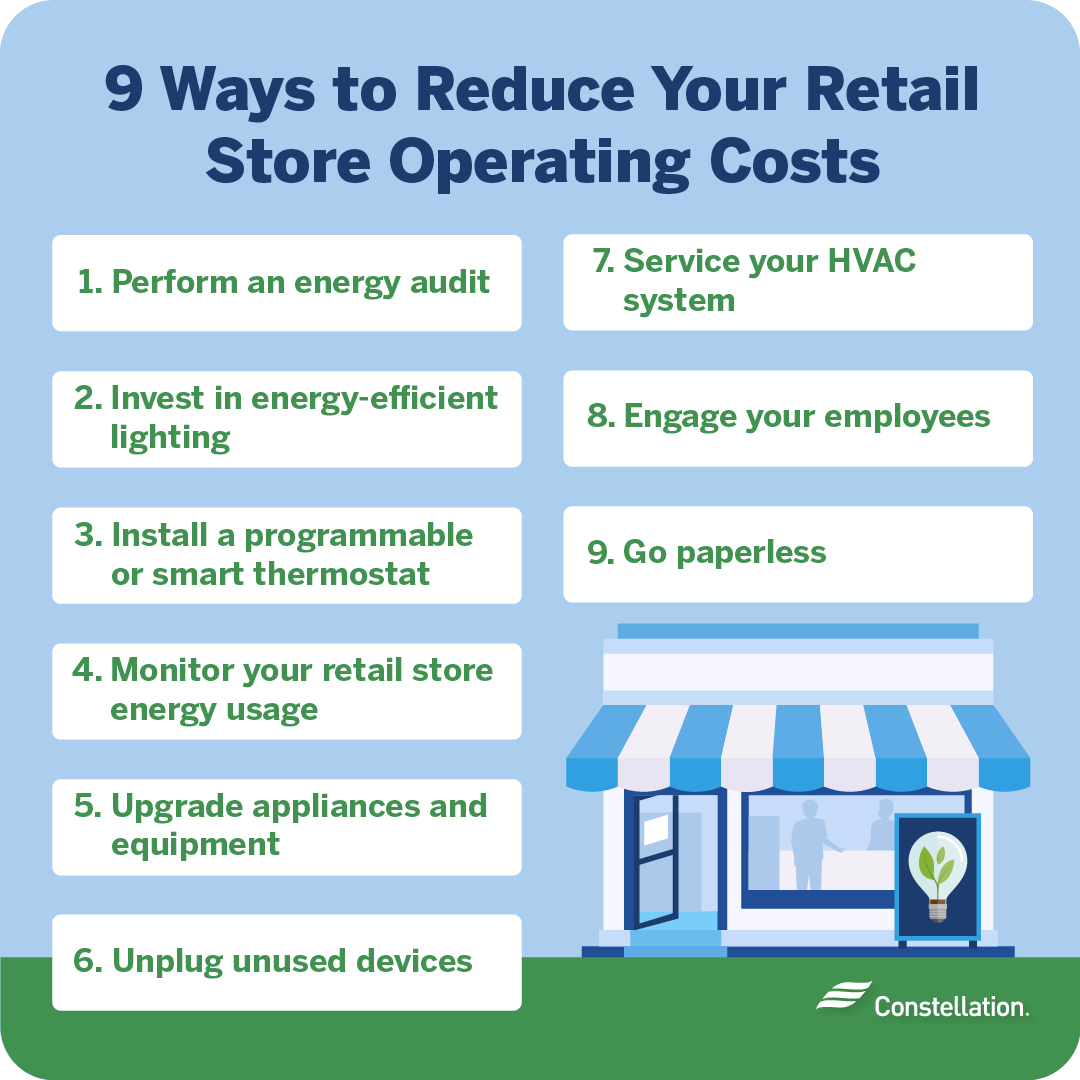
- Perform an energy audit. Before you do anything, learn the basics behind how to do a business energy audit in your store. You will discover where you are using the most energy and can identify ways to optimize your retail store energy consumption.
- Invest in energy-efficient lighting. Energy management in retail is easier when you install energy-efficient commercial light fixtures. You can find nearly any style and light color in LED bulbs that use much less power than incandescent or halogen lights. You won’t have to replace them as often either–a further savings.
- Install a programmable or smart thermostat. It is easy to get busy and focus on anything but adjusting the thermostat. Choose among different types of thermostats, such as programmable ones and smart thermostats that adjust automatically to optimize energy use and comfort.
- Monitor your retail store energy usage. You can purchase devices that let you measure energy use down to each individual light socket and circuit. Monitor your business energy usage and see in detail where you might be able to increase store energy efficiency.
- Upgrade appliances and equipment. Choose energy-efficient office equipment and ENERGY STAR appliances to lower how much energy you use.
- Unplug unused devices. Many devices use power even in the off position. Reduce standby power consumption by unplugging devices and you will lower your business energy bill.
- Service your HVAC system. Performing regular maintenance and replacing the filter regularly will keep your system running efficiently and using the least amount of energy.
- Engage employees. Involve your employees in identifying where to save energy and in practicing energy efficient habits.
- Go paperless. Ask customers if you can text or email them a receipt. Handle inventory and shipping documents digitally. When you go paperless, you’ll be more time efficient and you reduce retail store energy consumption.