
Why Is My Electric Bill So High?
- Home Page
- Energy 101: Resources to Help Understand Energy
- Energy Education
- Why Is My Electric Bill So High?
Sometimes a bill spikes suddenly for a short stretch — sometimes tied to a run of extreme weather — while other times it stays higher than expected. Either way, understanding the cause is the first step toward helping to potentially bring it down.
What Causes High Electric Bills?
Many factors can cause high electric bills. These include the type and size of your home, your climate, your habits, and the cost of power. The average cost of electricity in 2025 for U.S. residential customers was $.17 per kilowatt hour, up from $.16 per kilowatt hour in 2024.
Here are several factors behind higher electric bills and what you can do to possibly lower yours.
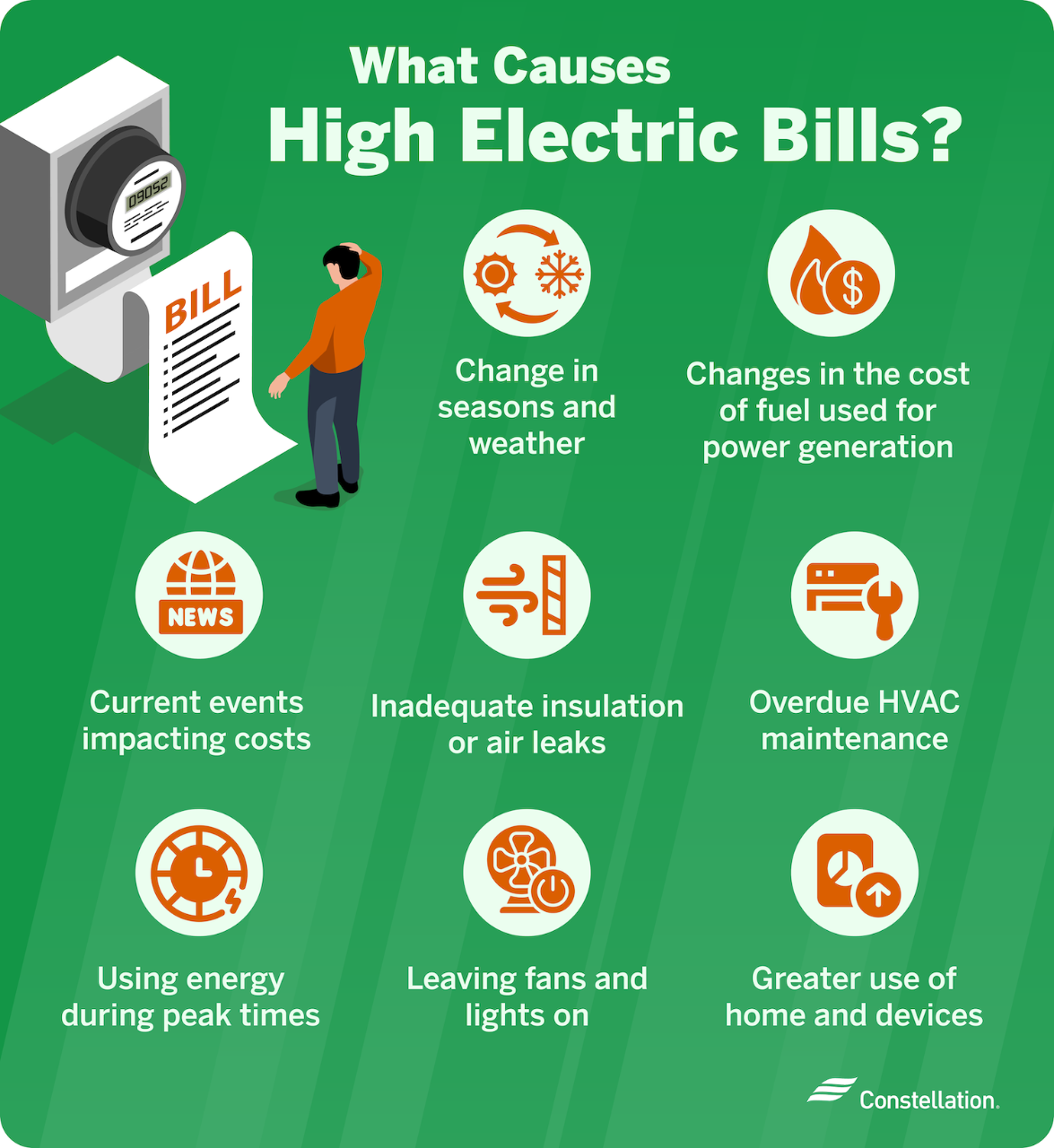
Change in seasons and weather
Your air conditioner works harder on hot days and your heater must step up in the winter. If your home relies on electricity for both, you’ll naturally use more energy during extreme weather.
If you’re wondering, “Why is my natural gas bill high?” or “why has my electric bill tripled in one month,” don’t simply compare it with last month. Compare it with your bill from the same month a year ago. It may not be an abnormally high electric bill after all. It could be a seasonal trend.
A stretch of extreme weather — like a multi-day heat dome that pushes temperatures well above normal, or a deep cold snap — is one of the most common reasons for an energy bill to suddenly jump. When outdoor temperatures swing far from your thermostat's setting, your HVAC system has to run far more often (sometimes nearly nonstop) to keep up, and that extra runtime shows up on your next bill. This is true whether the extreme is heat or cold, and it's normal, not a sign that something is wrong with your service or your meter. If you're weighing whether to let your air conditioner run continuously at a steady, moderate setting or shut it off and restart it later, know that constant, moderate cooling may be more efficient than making your system work harder to recover from a big temperature swing.
Changes in the cost of fuel used for power generation
Even as the power grid increasingly includes clean energy sources, most energy still comes from gas, oil and coal-fired power plants. Market prices for these fuels directly affect the cost of generating electricity.
These price changes are reflected in the price you pay as a business or residential consumer. Since 42% of electrical power in the U.S. is generated by natural gas, it significantly influences the cost of electricity. That being said, natural gas prices increased from $3.00 per million British thermal units (MMBtu) in September 2025 to $4.10 per MMBtu in January 2026.
Current events impacting costs
U.S. electricity prices are affected by world events and macroeconomic forces that add risk and volatility to the market. These include:
- International conflicts and geopolitical events
- Shipping disruptions
- Trade wars
- Tariffs
- Extreme weather that can impact infrastructure and disrupts service
- Phasing out federal tax incentives for clean energy
Demand is also on the rise, driven by the growth of regional data hubs and AI centers. The market is also affected by inflation.
You can explore how electricity pricing works to learn more about the aspects that drive electricity costs.
Inadequate insulation or air leaks
You may not notice that your home’s insulation is insufficient when temperatures are mild. In extreme cold, you may feel air leaks from windows and doors. When it’s extremely hot, bad insulation makes it harder to keep cool. A home energy audit may answer your question about why your electric bill is so high.
Indeed, poor insulation is a common factor that causes high electric bills. An audit can help you when it comes to finding air leaks in your home. You could put an end to energy waste and potentially cut your bill by beefing up your insulation. A simple thing, like how to weatherstrip a door, can make a difference.
Overdue HVAC maintenance
Even if they’re not the newest models, your air conditioner and heater will be more efficient with clean filters and motors that are running smoothly. If you have a clogged filter or worn parts, your system will have to work harder to achieve the same level of heat or cooling, consuming more electricity, leading to an abnormally high electric bill. Following HVAC lifespan tips also keep your systems running longer.
Your water heater is running more than you think
Your water heater doesn't just turn on when you take a shower — it works around the clock to keep the water in your tank at a set temperature, whether you're using hot water or not. That constant cycling makes it one of the biggest hidden contributors to a high electric bill, often accounting for a meaningful share of a home's total energy use. A simple fix is checking your water heater's thermostat: many are set higher than necessary. Lowering it to around 120°F is usually enough for comfortable use, may meaningfully cut your water heating costs, and helps reduce the risk of scalding.
Using energy during peak times
Seasonal demand changes are only part of the story. Demand can change throughout the day. At night, when most businesses are closed and people are asleep, demand may be lower. During the hottest summer days, demand in the late afternoon could be exceedingly high.
You may have access to plans that encourage you to run large appliances, like dishwashers, washers and dryers, ovens, A/C units, and vacuums during evening off-peak times. You may be able to save money with plans that reward you for using such appliances when electricity rates are lowest.
Leaving fans and lights on
Leaving lights, fans, and appliances on when not in use can cause high bills. Leaving a light on is bad enough, it is worse with energy-wasting incandescent bulbs. Swap out bulbs for efficient LED lights. Turn off appliances like televisions, computers, game consoles, and others when not in use. Properly placed fans may be worth leaving on if they circulate air and reduce how hard your HVAC must work. This kind of energy use — power drawn by devices that are plugged in but not actively being used — is often called phantom load or standby power. It can add up to a noticeable share of your total electricity use over a month, even though no single device seems like a big draw on its own.
Greater use of home and devices
Working from home increases energy usage. You may run your air conditioner more or keep your heat higher to be comfortable. Your computer, printer and other electronics will draw energy all day. You may need brighter lighting, too.
You can reduce the impact by using efficient lighting and devices. Unplug and turn off devices when left idle. Plugging devices into smart plugs that automate turning them on and off can help. You won’t have to put effort into remembering to turn them off.
Possible Ways to Save Money on Your Electricity Bill
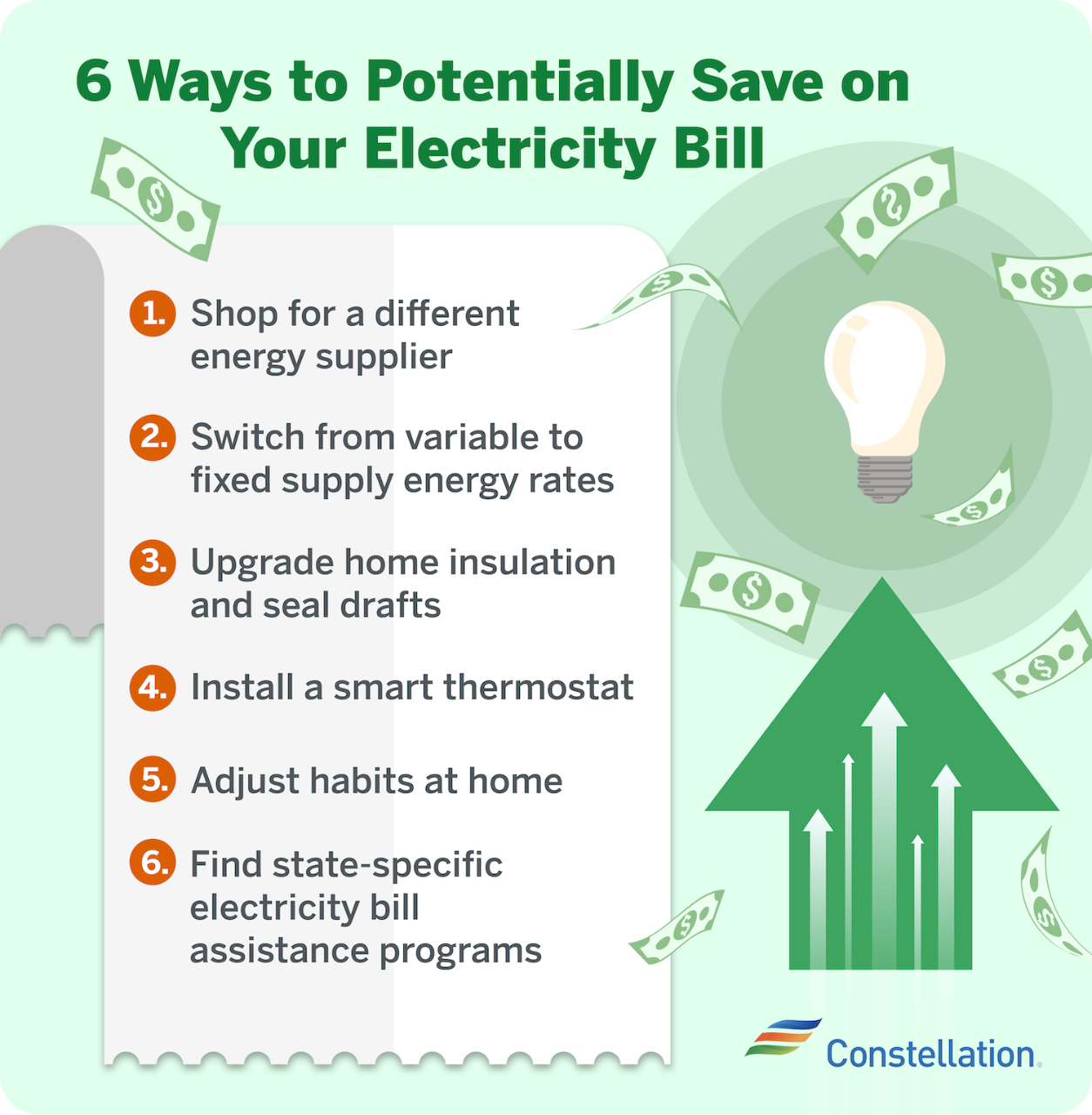
The price of electricity is driven by complex factors. Rising prices are beyond your control. Changing a few habits, taking advantage of energy-saving tips and a few DIY upgrades gives you more control of your bill.
1. Shop for a different energy supplier
If you live in an energy choice state, you can shop for plans that work with your lifestyle.
Residents in New Jersey can choose fixed-rate and renewable energy plans that fit different budgets, with options that protect against seasonal and market-driven price swings.
Pennsylvania is an active retail supplier market, meaning you can choose a supplier and a plan that fits your needs. If you don’t make a choice, you get default service from the utility in your area.
Customers in Connecticut benefit from suppliers who compete by offering fixed-rate plans.
Electricity users in Texas enjoy one of the most open retail markets in the country. Providers in TX have plan options to fit your budget and accommodate your risk tolerance for price swings and unexpected electricity price increases.
2. Switch from variable to fixed supply energy rates
You can help protect yourself from high fuel costs and an abnormally high electric bill by changing your power contract terms to lock in an electricity rate for an entire year or longer. It’s tough budgeting with unpredictable variable rates. Fixed supply rates give you the ability to plan and could possibly save you money in the long run.
3. Upgrade home insulation and seal drafts
Adding and upgrading home insulation and taking the time to seal drafts are efforts that could pay off in terms of comfort and energy savings.
4. Install a smart thermostat
Swap from a traditional thermostat to a smart model. They will maintain the best thermostat settings and optimize how your HVAC systems run as conditions change throughout the day, which could greatly improve energy efficiency and costs. For example, some households may find that keeping the thermostat around 68°F during a cold snap and around 78°F during a heat wave — adjusting a few degrees when you're away or asleep — can meaningfully reduce the extra strain extreme weather puts on your system, in either direction.
5. Adjust habits at home
Making small adjustments in home habits, like turning off lights, lowering the thermostat, making sure your dishwasher is full before running it, and using drapes and fans to manage sunlight can all help when you’re faced with figuring out why your electric bill is so high.
6. Find state-specific electricity bill assistance programs
You can apply to various state and federal programs that help you with a high electric bill.
You might qualify for the federal Low Income Home Energy Assistance Program (LIHEAP) or a state-level Comprehensive Energy Assistance Program (CEAP), both of which provide financial assistance.
Another program is the Weatherization Assistance Program (WAP), which helps you make your home more energy-efficient.
Frequently Asked Questions About Electricity Rates
Heating and cooling your home is likely to use the most power. The next most power-hungry appliances are your: electric water heater, large appliances (washers, dryers, ovens), and refrigerator. Smaller appliances and devices, like gaming systems, computers, televisions, printers and lights, don't draw as much energy. However, they often use electricity even when off, adding to your energy usage.
You can lower a high electric bill by reducing your HVAC usage. Raise your thermostat a few degrees in the summer and lower it a few degrees in winter.
Replace filters often to keep it running efficiently. Look for air leaks around your house and add insulation and weather stripping where necessary to keep heated and cooled air inside your home.
You can also add insulation to your water heater, adjust it down a few degrees and get it serviced to run at peak efficiency.
The most common reason is a stretch of unusually hot or cold weather that pushed your heating or cooling system to run much more than usual. Rather than comparing your bill to last month, compare it to the same month last year — if your usage looks in line with that comparison, the spike is likely weather-driven and temporary. If usage looks normal but the amount due is still unusually high, check your bill for a rate change.
While the energy market for Texas is open and competitive, the state experiences large swings in demand. Summer heat drives high demand on capacity and creates transmission constraints, which can send prices soaring. You can lower your risk by choosing a fixed-rate plan in Texas.
Demand for heat during the cold winter months creates seasonal electricity price spikes in Connecticut.
Distribution charges are relatively high for some utilities in the state. It's also a forward-capacity market, meaning it builds capacity years ahead of expected demand. That equals investments that customers have to pay for now.
Like Connecticut, Massachusetts is part of a forward-capacity market, meaning the region invests in power plant capacity years in advance of when it's actually needed — and those costs are built into customer rates today. Demand also peaks twice a year, during hot summers and cold winters, which can drive short-term price increases. A fixed-rate plan can help smooth out those seasonal swings.
The market for energy in New Jersey experiences peaks in demand during hot summers and cold winters. Investments across the state in grid upgrades and clean energy are helping address the price swings caused by fuel prices.
Customers who choose certain price plans can avoid the swings that affect wholesale market prices.
Ohio's competitive retail electricity market means you can choose your own supplier and plan, but the state is still part of the larger PJM regional grid, which experiences demand swings during both summer heat waves and winter cold snaps. When regional demand rises sharply, wholesale prices can follow. Choosing a fixed-rate plan can help protect you from those swings regardless of the season.
Cold weather drives up demand in the winter, which then drives up wholesale prices. Customers who don't choose a supplier get electricity from the utility. Customers who don't choose a fixed-price plan are subject to the volatility and price changes of the energy market.